Why Giving You Less Time at the Table Actually Gives You More
The Moment You Stop Checking the Time Is the Moment Dinner Gets Good
Let's be honest. Most American dining experiences have a loose, undefined quality to them. You show up, you order when you feel like it, you linger as long as the server doesn't hover too noticeably, and eventually the check appears like a soft suggestion. There's a freedom in that — or at least the feeling of freedom.
But here's something worth sitting with: when everything is open-ended, the mind tends to drift. You check your phone. You wonder if you should order dessert or if that's too much. You lose the thread of the conversation somewhere between the entrée and the second glass of wine. The meal happens to you rather than with you.
Timed seatings — the kind practiced at Japanese fine dining establishments and built into the rhythm of 36 Sakura Café — work on a completely different logic. And once you understand that logic, the whole experience shifts.
Where the Idea Actually Comes From
Japan has a long relationship with structured time. From the choreography of a traditional tea ceremony to the precise seasonal windows of cherry blossom viewing, Japanese culture treats temporal limits not as restrictions but as frames — the way a picture frame doesn't cage a painting but gives it meaning.
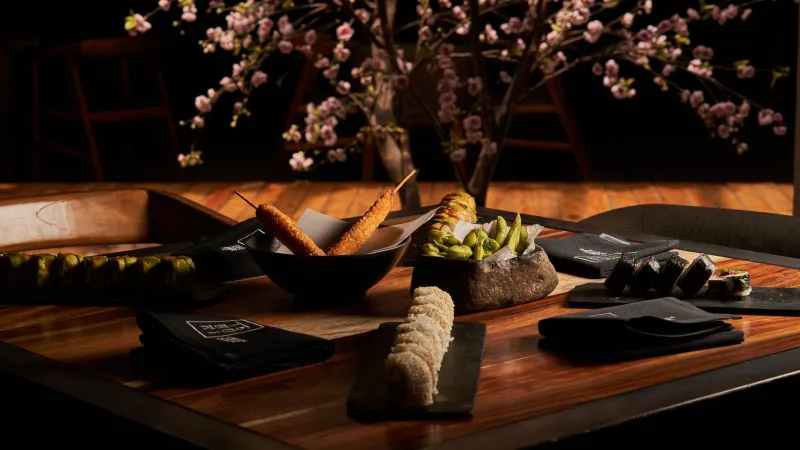
In Japanese fine dining, this shows up as kaiseki pacing, where each course arrives with intention and a meal has a beginning, a middle, and a deliberate end. Time isn't wasted or stretched — it's shaped. The dining window isn't a countdown. It's a container.
At 36 Sakura Café, that philosophy informs how we think about every seating. The number 36 — our tables, our seats, our name — isn't arbitrary. It reflects the belief that constraints, thoughtfully applied, create intimacy rather than limitation. A timed window is just one expression of that.
Why Americans Initially Push Back (And It Makes Total Sense)
When people first hear about a set dining window, the reaction is pretty predictable. Wait — they're telling me when to leave? It reads as controlling. It triggers that very American reflex around autonomy and getting what you paid for. If I'm spending real money on a nice dinner, shouldn't I be able to stay as long as I want?
That instinct is understandable. But it's also based on a misread of what the timed window is actually doing.
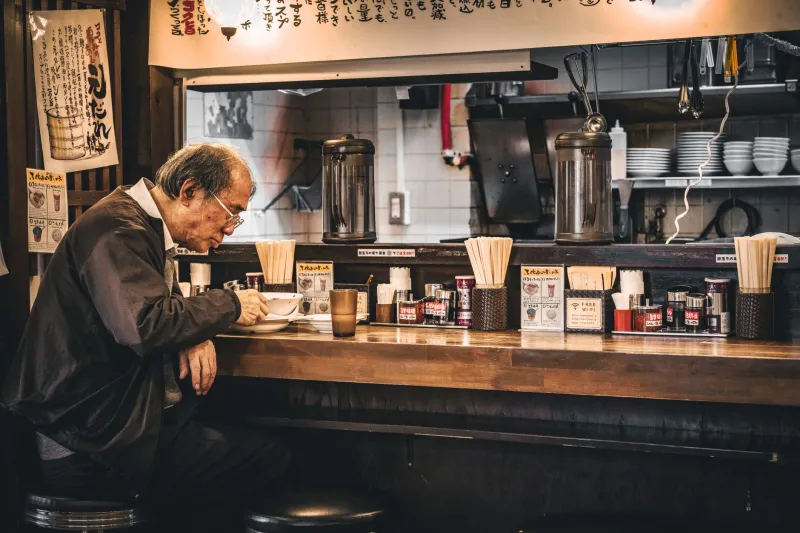
The resistance usually comes from associating time limits with fast food or rushed service — the opposite of what you're hoping for at a place like this. Nobody wants to feel like they're being processed. Nobody wants a server hovering with a dessert menu at the 58-minute mark.
But a well-designed dining window doesn't feel like that at all. It feels — and this is the part that surprises most first-time guests — like being held.
The Psychology of Knowing When Something Ends
Here's what behavioral research keeps confirming: humans are remarkably bad at being present when a situation has no defined endpoint. Deadlines, counterintuitively, reduce anxiety rather than increase it. When you know a dinner runs a certain length, you stop doing the mental math. You stop wondering whether you've been there too long or not long enough. You just... eat.
There's a concept in psychology called temporal landmarks — specific moments that signal transitions and help us organize experience into meaningful chunks. A timed seating is essentially a temporal landmark built into the meal itself. It tells your brain: this is a complete thing. Pay attention to it.
The result? Conversations go deeper. Food gets more attention. That second glass of sake actually gets tasted instead of just consumed. The evening has a shape, and shape is what makes something memorable.
What the 36-Minute Philosophy Looks Like in Practice
At 36 Sakura Café, we don't think of a dining window as a hard stop — we think of it as a rhythm. The meal is paced so that each course has room to breathe, conversation has space to develop, and the whole experience builds toward something rather than just continuing indefinitely.
Guests who've dined with us more than once often say the same thing: they didn't feel rushed, but they also didn't feel like the evening sagged. There's a difference between a dinner that ends and a dinner that resolves. One feels cut off. The other feels complete.
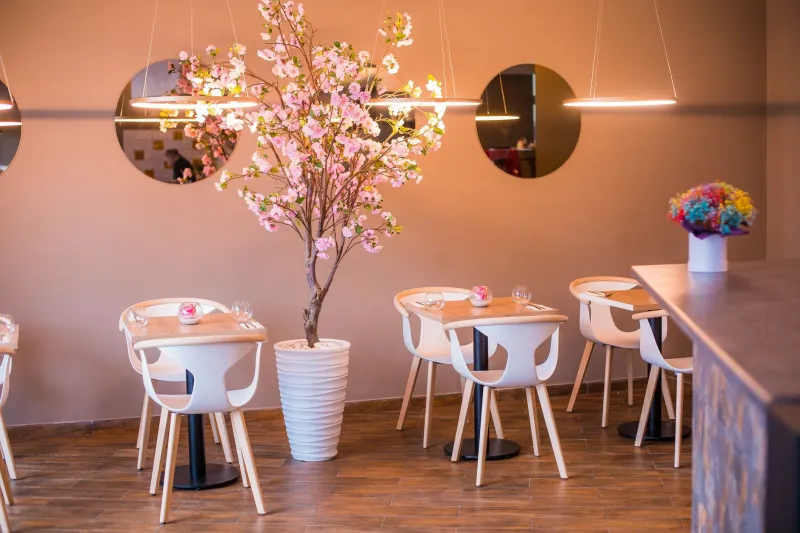
The cherry blossom is, maybe not coincidentally, the perfect metaphor here. Mono no aware — the Japanese concept of the bittersweet beauty of impermanence — is baked into the sakura experience. The blossoms are precious partly because they don't last. The same principle applies to a well-designed meal. Knowing it will end makes you show up for it more fully.
The Surrender That Doesn't Feel Like Surrender
The funny thing about first-time guests at 36 Sakura Café is that they often arrive a little skeptical about the structure and leave wishing they could stay — not because the time ran out too fast, but because the experience was complete enough to want more of.
That's the paradox at the heart of this whole thing. When you release the need to control the shape of the evening, the evening actually becomes yours in a deeper way. You stop managing it and start inhabiting it.
American dining culture is slowly waking up to this. Omakase restaurants — where the chef decides everything — have exploded in popularity over the last decade precisely because people are hungry (in every sense) for an experience they don't have to curate. The timed seating is a gentler version of the same surrender.
Come With an Open Hand
If you're booking your first dinner at 36 Sakura Café, here's the one thing worth knowing before you arrive: the structure isn't working against you. The pacing, the window, the way the evening has been designed — it's all there to do the heavy lifting so you don't have to.
You don't have to manage the pace. You don't have to flag down anyone or wonder if you've overstayed. You just have to show up, sit down, and let the meal be what it is.
That's actually a harder thing than it sounds in a culture that rewards constant optimization. But once you get there — once you stop trying to run the evening and just let it run — something opens up.
The blossoms don't last. Neither does a great dinner. That's exactly the point.