You Don't Need a Plane Ticket to Experience Japan's Most Fleeting Season
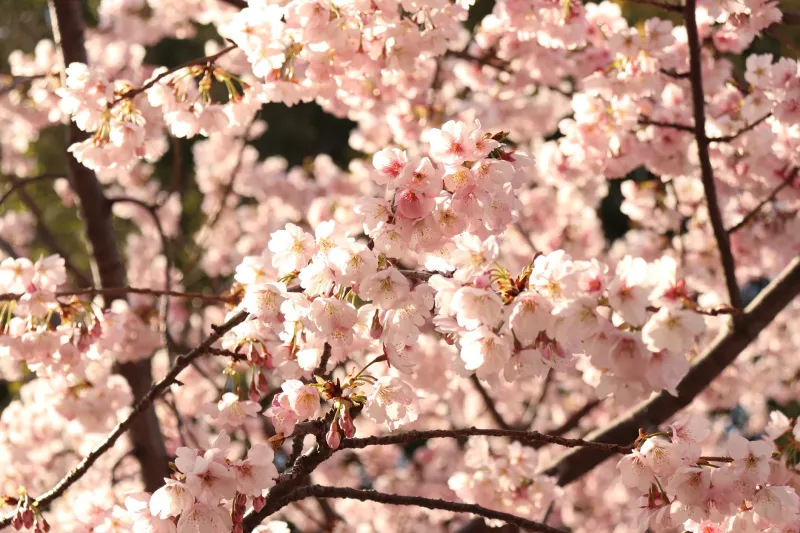
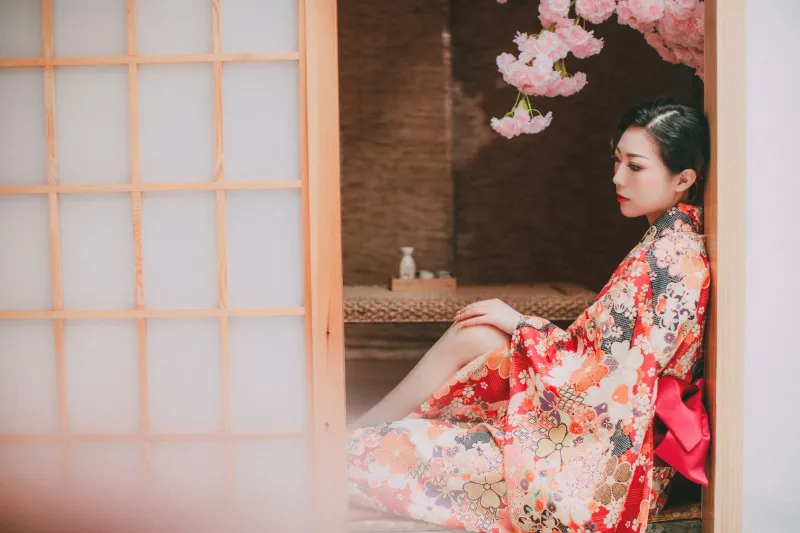
If you've spent any time on travel social media in March or April, you know the images well. Tunnels of pale pink canopy stretching over stone paths in Kyoto. Couples in yukata standing beneath trees so full of blossoms they look like clouds that forgot to keep moving. Petals drifting into rivers, catching in hair, settling on food. It's one of the most photographed phenomena on the planet, and it lasts about two weeks.
Japan's cherry blossom season — hanami, the tradition of flower viewing — draws somewhere between 60 and 100 million visitors annually, depending on the year. People plan trips 18 months in advance. They track bloom forecasts the way Americans track hurricane models. They fly across oceans for something that will be gone before their return flight home.
There's a reason for that. And understanding it changes the way you eat.
What Sakura Actually Means
The cherry blossom has been central to Japanese culture for over a thousand years. But its significance isn't primarily about beauty — or at least, not beauty in the decorative sense. Sakura is revered precisely because it doesn't last. The bloom is a living demonstration of mono no aware, a Japanese phrase that roughly translates to "the pathos of things" — the bittersweet recognition that everything beautiful is temporary, and that this temporariness is what makes it beautiful in the first place.
This is not a casual philosophical position. It's woven into Japanese art, literature, architecture, and food. The cherry blossom appears in poetry from the 8th century onward. Samurai adopted it as a symbol of the warrior's life — brilliant and brief. Today, the Japanese Meteorological Corporation issues official sakura forecasts each spring, tracking the "bloom front" as it moves northward from Kyushu to Hokkaido over the course of six weeks.
People don't just admire cherry blossoms. They gather under them, eat beneath them, drink sake in their shade, and sit quietly in their presence. Hanami is a communal act of paying attention to something that won't be there tomorrow.
The American Relationship with Sakura
Cherry blossoms have a longer history in the United States than most people realize. In 1912, Japan gifted Washington, D.C. with 3,020 cherry trees as a gesture of friendship — trees whose descendants still bloom along the Tidal Basin every spring, drawing over a million visitors. More recently, cherry blossom festivals have taken root in cities from San Francisco to Brooklyn, and sakura-flavored products have exploded across American grocery stores and coffee chains.
But for most Americans, the experience of sakura remains primarily visual — something seen from a distance, in a photo, or on a brief walk through a park. The deeper cultural context, the way the Japanese experience of hanami connects eating and drinking and gathering and impermanence into a single act of presence, tends to get lost in translation.
That's the gap that 36 Sakura Café was built to close.
Bringing the Bloom to the Table
The menu at 36 Sakura Café is seasonal in a way that goes beyond the usual farm-to-table framing. It's calibrated to the actual rhythms of the sakura calendar — not just the visual symbolism of cherry blossoms, but the flavors, textures, and sensory qualities that define the season in Japanese culinary tradition.
Salt-preserved cherry blossoms, harvested at peak bloom and cured for months, appear in dishes throughout the spring menu. Their flavor is subtle and unusual — floral but not sweet, with a slight brininess that somehow makes the floral note sharper. Sakura tea, brewed from the same preserved petals, carries a pale pink color and a fragrance that's genuinely difficult to describe to someone who hasn't tasted it. It smells like spring the way that's only possible if you've been waiting for spring.
These aren't garnishes or decorative gestures. They're ingredients with centuries of culinary history, used in Japan in everything from rice dishes to traditional wagashi sweets to savory pickles. At 36 Sakura Café, they're treated with the same seriousness.
The Sensory Geography of a Single Meal
Travel writers often describe hanami in terms of total sensory immersion — the smell of blossoms on the wind, the soft light filtered through petals, the sound of people gathering, the particular quality of a spring afternoon in Japan when the trees are at full bloom. It's an experience that engages every sense simultaneously, which is part of why it's so hard to replicate through a photograph.
A meal at 36 Sakura Café is designed with that same multi-sensory intention. The lighting shifts subtly across the 36-minute dining window, mimicking the transition from late afternoon to early evening — the hour in Japan when hanami gatherings tend to peak. The temperature of the room is kept slightly cool, the way outdoor spring air feels before the warmth of the day has fully built. The music, where there is any, is ambient and sparse.
None of this is accidental. It's a deliberate attempt to recreate not the visual experience of cherry blossom season, but the felt experience — the particular quality of attention that the season demands.
What You're Really Chasing
The millions of people who fly to Japan for hanami aren't primarily chasing a pretty picture, even if their social feeds might suggest otherwise. They're chasing the feeling that comes from standing in the presence of something beautiful that you know is ending. That feeling is clarifying in a way that's hard to articulate and easy to recognize. It makes you pay attention. It makes you present.
You don't need to be in Kyoto for that. You need to be somewhere that asks something similar of you — that presents you with beauty designed to be noticed, in a space that rewards slowness, over a meal that tastes like a season.
The cherry blossoms won't last. They never do. That's the whole point.
Come while they're here.