The Two-Stick Advantage: How Chopsticks Slow Dinner Down and Make Every Bite Louder
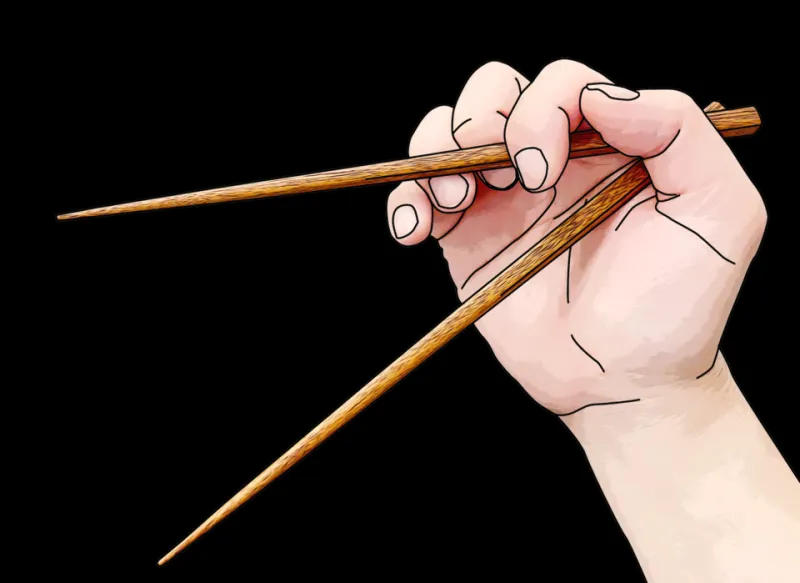
Photo: Marcosticks, CC BY-SA 4.0, via Wikimedia Commons
Chopsticks look like a challenge if you grew up with a fork. They are two thin sticks, no scoop, no tines, no obvious safety net. But that is exactly the point. At 36 Sakura Café, chopsticks are not there to test your coordination. They are there to change the rhythm of the meal — and, as it turns out, the way you taste it.
This is not a purist argument. You can ask for a fork. Nobody will gasp. But if you are curious about why the food seems to land differently when you use chopsticks, here is a practical guide to the science, the form, and the small adjustments that make the whole thing easier.
Why Two Sticks Beat a Fork (Sometimes)
A fork is a tool for loading. You spear, scoop, and stack. It is efficient. It is also a little aggressive. You can fit a lot of food on a fork, and you can get it to your mouth quickly. That is great for a cafeteria lunch. It is less great for a multi-course meal where the kitchen is trying to pace you.
Chopsticks are a tool for picking up. They force you to take smaller amounts. They make you look at what you are eating. They require just enough concentration that you cannot completely autopilot your way through the plate. That tiny bit of attention is not a bug. It is the feature.
The Science of Smaller Bites
Researchers who study eating behavior have found that bite size and eating speed both influence how much you eat and how much you enjoy it. Smaller bites tend to slow the pace. Slower eating gives your body more time to register fullness. It also gives your palate more time to notice flavor changes from bite to bite.
Chopsticks naturally encourage smaller bites. You cannot shovel a mountain of rice into your mouth with two sticks unless you are very determined. You pick up a little. You eat it. You pick up a little more. That rhythm creates more pauses. More pauses mean more chances to taste.
There is also a temperature effect. A smaller bite cools faster, which matters with delicate dishes. And because you are not overwhelming your mouth with volume, the seasoning has room to show up. A little yuzu is louder when it is not buried under a forkful of everything else.
A Five-Minute Guide to Better Chopstick Form
You do not need to be an expert. You need to stop gripping them like a pair of tongs. Here is the simple version.
-
Hold the bottom stick still. Place it in the crook between your thumb and index finger, resting against your ring finger. This stick does not move much. It is the anchor.
-
Move the top stick like a pencil. Hold it between your thumb, index finger, and middle finger. Open and close it against the bottom stick. The motion is small. Think tweezers, not scissors.
-
Do not grip too high. If your hand is cramping, you are probably holding the sticks too far up or squeezing too hard. Move your hand down a little. Relax.
-
Pick up from the side, not the top. Aim for the edge of the food. Scooping from above is harder and messier. Slide the tips under or around the piece.
-
Practice with something forgiving. Start with a piece of pickled cucumber, a slice of tamago, or a single mushroom. Do not begin with a slippery noodle unless you are in it for the comedy.
-
Rest the sticks between bites. This is the most important one. Put them down. Chew. Talk. Take a breath. The pause is part of the meal.
How to Eat Slower Without Thinking About It
If you want to slow down at 36 Sakura Café, you do not need a timer or a mindfulness app. Use the chopsticks as a pacemaker. Take one piece at a time. Set the sticks down after every few bites. Drink tea between courses. Let the server clear a plate before you ask for the next thing.
These are small moves, but they add up. A meal that might have taken 35 minutes with a fork can stretch to 50 or 60 without feeling like a lecture. You are not eating less on purpose. You are just giving each bite a little more room.
And that room changes the flavor. A crisp tempura leaf tastes different when you eat it in three small bites instead of one big crunch. A piece of sashimi tastes sweeter when you are not chasing it with a mouthful of rice. Even the pickles start to feel like a course instead of a garnish.
The One Rule That Matters
There is no chopstick police. If you drop a piece of food, nobody is going to throw you out. If you need a fork, ask for a fork. The goal is not to perform Japanese etiquette perfectly. The goal is to eat in a way that lets you actually notice what the kitchen did.
At 36 Sakura Café, the two sticks are a quiet invitation. Slow down. Take a smaller bite. Put the sticks down. Let the next flavor arrive when it is ready. You may not leave with perfect form, but you will leave with a better sense of what you just ate.