Something Happens When the Plate Arrives: The Unexpected Stillness of Sakura Dining
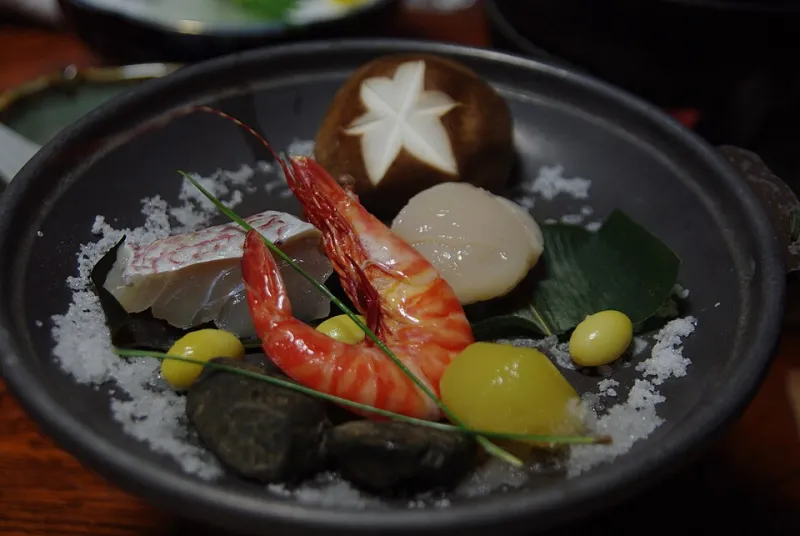
Photo: pelican from Tokyo, Japan, CC BY-SA 2.0, via Wikimedia Commons
It usually catches people off guard the first time.
You're mid-sentence — maybe finishing a story about your week, maybe laughing at something your friend just said — and then the server sets the plate down in front of you. And you just... stop. The words evaporate. Your eyes drop. For a few seconds, maybe longer, the table goes quiet in a way that feels almost involuntary.
Regular guests at 36 Sakura Café know this moment well. First-timers are often a little startled by it. But it keeps happening, table after table, night after night. And it turns out there's a lot going on beneath the surface of that quiet pause.
It's Not Just You — It's Literally Your Brain
Here's the thing: the silence isn't about manners. It's not a cultural rule anyone explained before you sat down. It's a neurological response, and researchers who study multisensory perception have been documenting it for years.
When the brain encounters something visually complex and emotionally resonant — a plate arranged with real intention, colors that feel deliberate, shapes that suggest something beyond just food — it temporarily redirects cognitive resources. Attention narrows. The internal monologue quiets. Psychologists sometimes call this involuntary attention, as opposed to the directed kind we use when we're trying to focus on something specific.
Beautiful, unexpected visual input essentially interrupts the brain's default chatter. And when that visual input is also tied to smell, anticipation, and the knowledge that you're about to eat something meaningful? The effect compounds.
At 36 Sakura Café, the sakura-focused dishes are designed — deliberately, carefully — to hit multiple sensory channels at once. The pale pink of preserved cherry blossom petals against a matte ceramic surface. The faint, almost powdery floral scent that arrives a half-second before the plate does. The precise placement of each element, which communicates that someone spent real time thinking about what you're about to experience. Your nervous system picks all of that up simultaneously, and the result is that hush.
The Japanese Concept Behind the Quiet
In Japanese dining culture, this kind of pause has a name and a context, even if it's rarely explained outright to Western guests. The practice of receiving food with full presence — before lifting chopsticks, before speaking, before anything else — is woven into the broader philosophy of itadakimasu, the ritual expression of gratitude said before eating. But it goes deeper than a phrase.
Traditional Japanese aesthetics place enormous value on ma — a concept that roughly translates to meaningful negative space, or the power of a pause. In architecture, in music, in conversation, and yes, in dining, ma is the moment of stillness that gives everything around it more weight. The quiet at the table isn't empty. It's doing something.
American diners don't usually arrive at 36 Sakura Café knowing any of this. But they feel it anyway. Which says something interesting about how deeply these ideas can translate across cultural lines when the environment is designed to carry them.
How the Room Itself Sets You Up
The stillness doesn't start when the plate arrives. It starts earlier, and the design of 36 Sakura Café is doing a lot of quiet work to get you there.
The lighting is soft and warm without being dim. The sound levels are calibrated so that conversation feels natural but never has to compete with a loud room. The color palette — creams, soft greens, the occasional blush pink — keeps the visual environment calm. There's nothing jarring, nothing that demands attention in an aggressive way.
By the time your sakura dish arrives, your nervous system has already been gently dialed down from whatever pace you walked in with. The restaurant has been slowly, almost invisibly, shifting your baseline. So when the plate lands and your brain registers something genuinely beautiful, the contrast between that and your already-quieted state is enough to stop you mid-thought.
This isn't accidental. It's the result of thinking carefully about how humans move through a meal — not just what they eat, but how they feel at every stage of the experience.
What the Silence Actually Does for the Food
Here's the practical upside, beyond the philosophy: that pause makes everything taste better.
This isn't a metaphor. When you slow down before eating — when you actually look at the food, register the smell, and approach the first bite with some degree of presence — your digestive system responds differently. Saliva production increases. Gastric acid starts flowing in anticipation. Your body prepares more completely for what's coming, which means the flavor compounds in the food hit more receptors, more efficiently.
Mindful eating research has been building this case for a couple of decades now, and the findings are consistent: people who pause before eating report more satisfaction, perceive flavors as more complex, and feel fuller on less food. The silence at the table isn't just a nice cultural moment. It's making your meal genuinely better.
At 36 Sakura Café, the sakura dishes are already doing a lot of heavy lifting on flavor — the subtle salted-floral notes of preserved petals, the way cherry blossom interacts with umami-rich bases, the texture contrasts that make each bite interesting. But arriving at those flavors in a state of quiet attention means you actually catch all of it. Nothing slips past.
What Guests Say After
Talk to regulars about this, and a pattern emerges pretty quickly. People describe their first visit as feeling different from other restaurant experiences without being able to immediately say why. They use words like calm and focused and, occasionally, almost meditative. Some say they left feeling more rested than when they arrived, which sounds strange until you consider how much mental noise most of us carry into dinner.
The stillness that falls when a sakura plate arrives is a small thing, maybe thirty seconds, maybe less. But it seems to anchor the whole meal in a way that guests carry with them afterward.
That's the thing about ma. The pause isn't nothing. It's often the part that stays with you longest.
Ready to experience it for yourself? Reservations at 36 Sakura Café are open — and we promise, the quiet will find you on its own.