The Art of Breathing Room: How the Japanese Idea of 'Ma' Makes Every Bite at 36 Sakura Café Mean More
There's a moment that happens at 36 Sakura Café that guests sometimes struggle to describe afterward. The food hasn't arrived yet. The conversation has found a natural lull. The room isn't loud, but it isn't silent either. And somehow — without quite knowing why — you feel completely at ease. Like the evening is already going well, even though nothing has technically "happened" yet.
That feeling has a name. In Japanese, it's called ma (間).
And once you understand what it means, you start seeing it everywhere in the way we've built this place.
What 'Ma' Actually Means (And Why It's Harder to Translate Than You'd Think)
Most English speakers encounter ma through art history or architecture — it's often translated as "negative space," the empty areas around and between objects that give a composition its sense of balance. But that translation only scratches the surface.
In Japanese philosophy and aesthetics, ma isn't just about visual emptiness. It describes the meaningful pause between sounds in music, the silence between spoken words that gives language its weight, the gap between two people that makes genuine closeness possible. It's not an absence of something. It's a presence in its own right.
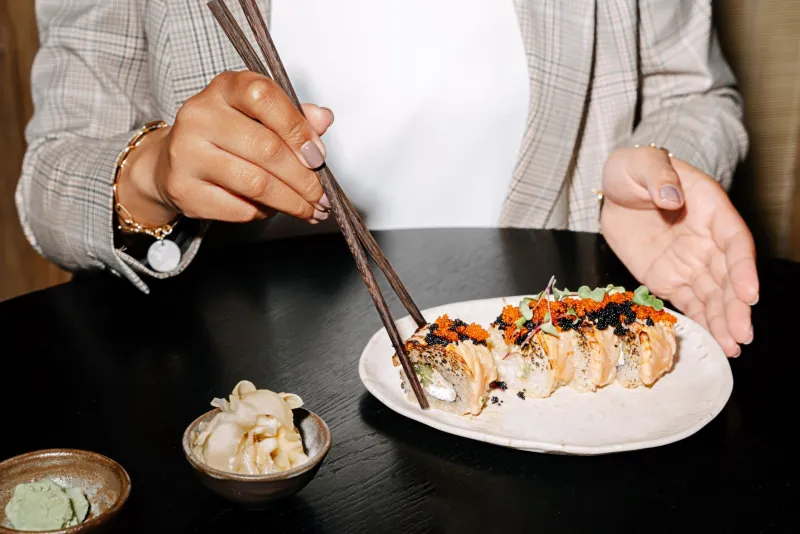
Think of it this way: a song isn't just the notes. It's also the rests. A conversation isn't just the words. It's also the breath between them. And a great meal isn't just the food. It's also the space that lets you actually taste it.
Western culture — and American dining culture especially — tends to treat emptiness as a problem to be solved. Empty wall? Hang something. Empty plate? Refill it. Quiet table? Put on background music. We've been trained to read fullness as value and stillness as neglect. Ma gently, persistently disagrees.
How We Built 'Ma' Into 36 Sakura Café Before You Ever Sit Down
The philosophy doesn't start at the table. It starts the moment you make a reservation.
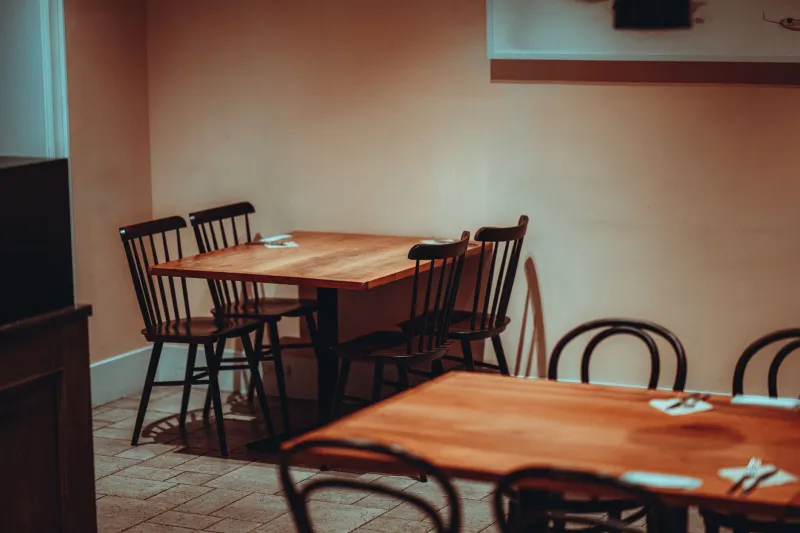
We keep our guest list intentionally small — 36 seats, always — which means the room never tips into chaos. When you walk in, there's actual physical breathing room between tables. You're not performing your dinner for the couple six inches to your left. You're not straining to hear your companion over a wall of noise. The space around you is doing something: it's letting you settle in.
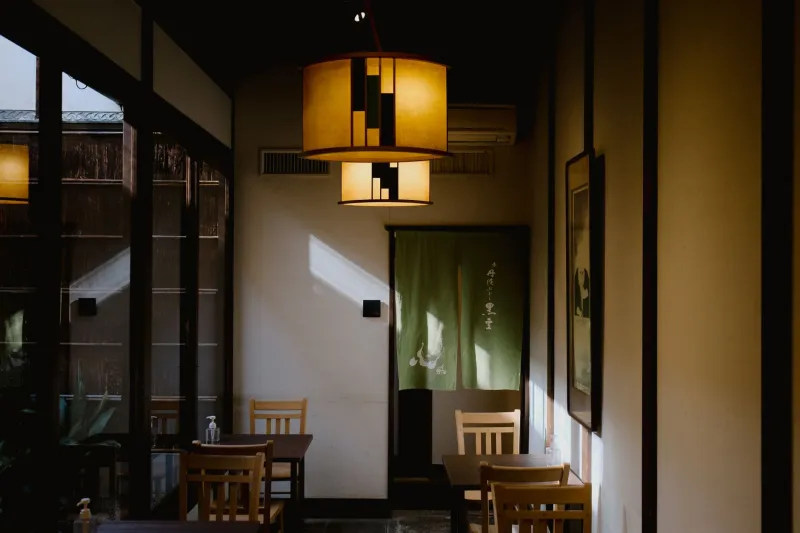
The visual design follows the same logic. You won't find walls covered edge to edge in décor. A single branch of cherry blossoms. A carefully placed ceramic. Negative space on the walls mirrors the negative space we're trying to create in your nervous system. Your eyes have somewhere to rest, and so does the rest of you.
Even the lighting is calibrated around ma. Bright enough to see your food properly — because how a dish looks is part of how it tastes — but soft enough that the room doesn't feel like it's demanding your attention. The light creates a kind of perimeter, a gentle boundary that says: this is your moment, and nothing outside it needs you right now.
The Pause Between Courses Isn't Dead Time — It's the Point
One of the places ma shows up most deliberately at 36 Sakura Café is in the pacing of a meal.
We don't rush courses out. There's an intentional rhythm to the evening — a stretch of time after one dish is cleared and before the next arrives where the table is, briefly, yours. No plate in front of you. No immediate task. Just the conversation, the tea, the ambient hum of the room.
In a lot of American restaurants, that gap would feel like a failure of service. Where's the food? Is something wrong? But here, guests almost universally describe it differently. They say things like: we actually talked, or I noticed how good the tea was, or simply I didn't feel rushed.
That pause is doing real work. It gives your palate a moment to reset. It lets whatever you just ate actually register — not just physically, but emotionally. It creates a small border between one experience and the next, so that each course feels distinct rather than blurring into a single, undifferentiated meal.
The Japanese have long understood that you can't fully appreciate something if it's immediately followed by something else. Ma is the gap that makes meaning possible.
Why This Hits Differently for American Diners
Here's the honest truth: the first time a lot of American guests experience ma in a dining context, it feels a little unfamiliar. We've been conditioned to equate busyness with quality. A packed restaurant must be a good one. A fast-moving kitchen must be an efficient one. A quiet moment at the table must mean something's off.
But something interesting tends to happen around the midpoint of a meal at 36 Sakura Café. The unfamiliarity softens. People stop checking their phones — not because we've asked them to, but because the space doesn't create the low-level anxiety that usually drives that habit. Conversations deepen. Couples who came in a little distracted from their days find their way back to each other. Solo diners settle into a kind of comfortable solitude that feels restorative rather than lonely.
This isn't magic. It's ma doing exactly what it's designed to do: clearing enough space that something real can happen.
Emptiness as Hospitality
There's a reframe that might be useful here, especially if you're new to this kind of dining: emptiness, in the ma sense, is a form of generosity.
When a host leaves breathing room in a room, they're saying: you don't have to perform here. When a menu isn't trying to overwhelm you with options, it's saying: we've done the thinking so you don't have to. When a pause in service gives you unscheduled time, it's saying: this evening belongs to you.
At 36 Sakura Café, we think about hospitality in exactly these terms. Every deliberate emptiness — the quiet corner, the unhurried pace, the single sprig of sakura on the table instead of a towering centerpiece — is an offering. It's space we're holding open for you.
And in a culture that rarely stops moving long enough to notice what it's actually experiencing, that kind of space might be the most nourishing thing we serve.
Ready to experience it for yourself? Reservations at 36 Sakura Café are available at 36sakuracafe.com — and yes, we'd suggest arriving a few minutes early. The transition into the evening is part of the meal.