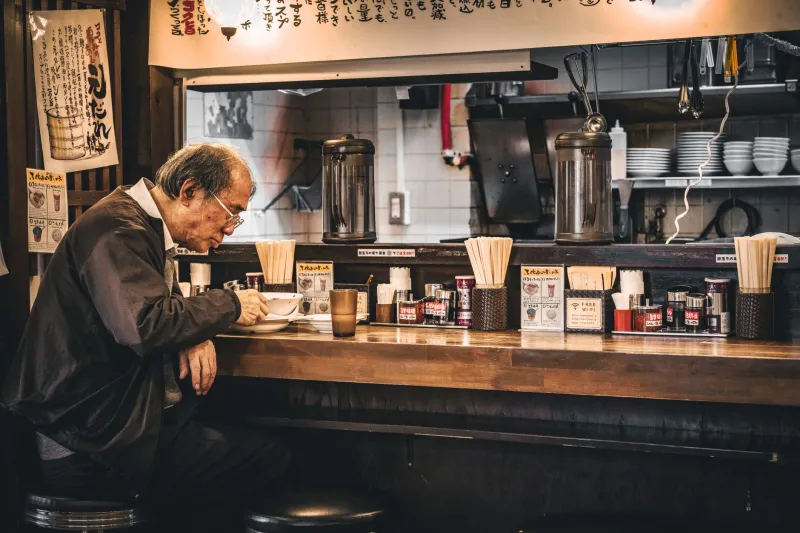
How 36 Seats Changed Everything: The Quiet Science of Tables That Make People Talk
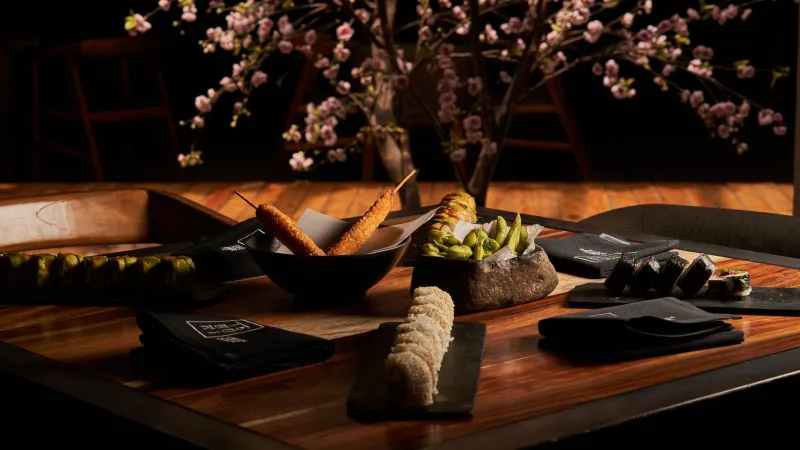
Ask most people to describe their favorite restaurant memory and they'll pause. They'll think. And then — almost always — they'll start talking about who they were with, not what they ate.
That's not a coincidence. That's design.
At 36 Sakura Café, the number of seats isn't a limitation. It's a philosophy made physical. Every chair, every table, every deliberate inch of space between one conversation and the next has been considered with the same care that goes into a bowl of miso or the arrangement of a single sprig of cherry blossom on a plate. And the result? Dinners that people are still talking about three years later.
So what's actually going on here? Why do some rooms make you lean in, and others make you want to look at your phone?
The Problem with Big
American dining culture has spent decades chasing scale. Bigger menus. Bigger portions. Bigger dining rooms that can turn 400 covers on a Saturday night. The logic made sense for a while — more seats, more revenue, more visibility.
But something got lost in the square footage.
Large restaurant spaces, particularly those designed for volume, tend to create what environmental psychologists call diffusion of attention. When a room holds 200 people, your brain is constantly processing ambient noise, movement, and visual information at a rate that's genuinely exhausting. You're not really present at your table. You're managing the room.
Smaller, intentional spaces work differently. They create what researchers sometimes refer to as bounded intimacy — a sense that the world has gotten a little smaller and a little more manageable, at least for the next two hours. Your nervous system relaxes. Your attention narrows. And suddenly, the person sitting across from you becomes the most interesting thing in the room.
That's not magic. That's math.
Why 36 Is the Right Number
Thirty-six seats sits in a sweet spot that hospitality designers have quietly understood for years. It's large enough to feel like a genuine dining destination — not a pop-up or a supper club — but small enough that the staff actually knows what's happening at every table. A server can read the energy of the room. A host can remember that the couple in the corner comes in every anniversary. A kitchen can send out dishes with timing that feels almost intuitive.
There's also something worth noting about the number itself in the context of Japanese culture. The concept of ma — the meaningful use of negative space, of the pause between notes — runs through Japanese art, architecture, and food in ways that most Americans are only beginning to appreciate. A room with 36 seats has ma. There's breathing room between tables. There's space for a conversation to exist without bleeding into the one next to it.
In a culture increasingly defined by noise, that kind of spatial quiet is genuinely radical.
The Geometry of Good Conversation
Table placement is one of those things that most diners never consciously notice — until it's wrong. You've been there: the table wedged next to the service station, or the one directly under a speaker, or the two-top so close to the next couple that you're essentially on a group date.
At 36 Sakura Café, tables are positioned with sightlines in mind. Not so guests can watch each other, but so they can have a peripheral sense of life happening around them — the soft movement of other diners, the unhurried rhythm of service — without being pulled out of their own moment. It's the restaurant equivalent of sitting in a well-designed park. You're aware of the world, but you're not consumed by it.
Research from the field of environmental psychology backs this up. Studies on social facilitation consistently show that people feel more comfortable, more talkative, and more emotionally open when they're in spaces that offer what's called prospect and refuge — the ability to see your surroundings while also feeling sheltered within them. Booths, angled seating, and partial dividers all serve this function. So does the warm, low-level lighting that characterizes most Japanese-inspired dining spaces.
At 36 Sakura Café, the cherry blossom aesthetic isn't just decorative. Those soft pinks, the natural wood tones, the occasional branch of sakura framing a corner — they signal something to the brain. Slow down. You're somewhere worth being.
What Happens After the Check Comes
Here's the part that's harder to quantify but easier to feel: the conversations that start at a table in a space like this tend to go somewhere real.
Maybe it's because phones stay in pockets longer when the environment is genuinely compelling. Maybe it's because the pacing of service — intentional, unhurried, course by course — gives conversations room to develop rather than rushing them toward a conclusion. Maybe it's just that when a room communicates care, the people inside it start to do the same.
Whatever the mechanism, the outcome shows up in the stories guests tell afterward. The couple who decided to move in together over omakase. The old friends who finally said the things they'd been meaning to say for years. The solo diner who ended up in a two-hour conversation with the chef about the origin of yuzu.
These aren't extraordinary events. They're ordinary human moments that got the space they needed to happen.
A Different Kind of ROI
For a restaurant, 36 seats means accepting a ceiling on nightly revenue. It's a trade-off that many operators would never make. But the return on that investment shows up in ways the spreadsheet doesn't capture: guests who come back. Guests who bring people. Guests who describe the experience to strangers at other dinner parties like they're sharing something that genuinely matters.
In an era when Americans are lonelier than they've been in decades — when we have more digital connections and fewer real ones — a room that's been designed to foster actual human contact is offering something that no app can replicate.
Thirty-six seats. Thirty-six conversations happening at any given moment. And somewhere in the middle of all of them, a memory being made that someone will still be telling years from now.
That's the math. And honestly? It adds up.