Dinner in 36: The Tiny Time Slot That's Quietly Changing How Americans Eat
There's a moment — usually somewhere around the second course — when guests at 36 Sakura Café notice something odd. Their phones are face-down. Their shoulders have dropped. They're actually talking to the person across from them, not performing the act of talking while mentally drafting tomorrow's to-do list. It happens almost every service, and it's not an accident.
The 36-minute dining experience wasn't designed to feel like a wellness intervention. But increasingly, that's exactly what guests are calling it.
The Overscheduled Diner Is a Very Real Person
Let's be honest about the state of the American dinner table. Between work notifications that don't clock out, kids' schedules that read like military logistics, and the ambient hum of a culture that treats busyness as a personality trait, sitting down to eat has quietly become one more thing to get through. A 2023 survey from the American Psychological Association found that nearly 65% of adults regularly report feeling too stressed to fully enjoy mealtimes. Sixty-five percent. That's not a niche problem — that's a national habit.
What's interesting is what people are doing about it. Rather than lobbying for longer, more elaborate dining experiences, a growing segment of American diners is moving in the opposite direction. They want shorter. Sharper. More intentional. They want a meal that respects their time precisely because it doesn't waste a second of it.
That's the sweet spot 36 Sakura Café has quietly moved into.
What 36 Minutes Actually Feels Like
If you haven't experienced it, the concept sounds almost confrontational. Thirty-six minutes? For a full meal? Doesn't that just mean rushing?
Not even close.
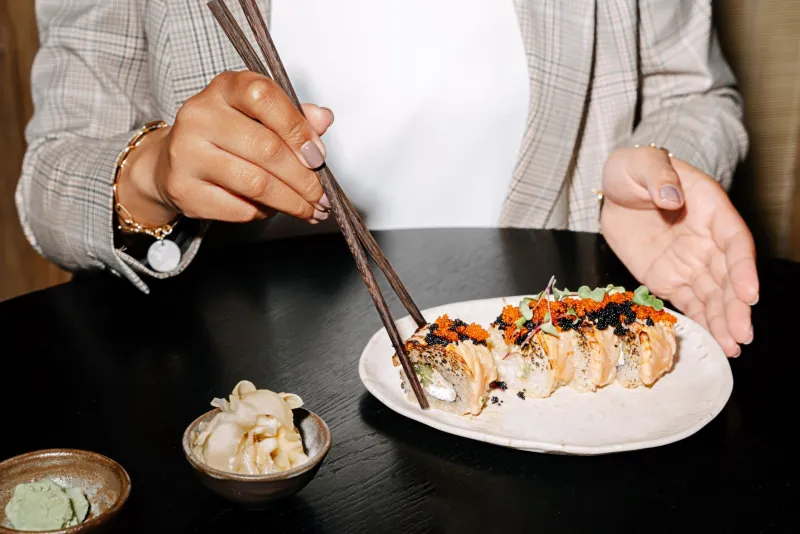
The service model at 36 Sakura Café is built around the Japanese principle of ma — the idea that space and timing aren't empty, they're intentional. Every plate arrives when it should. Every pause has a purpose. Nothing is padded, nothing is stalled, and nothing competes for your attention. The result isn't a sprint through dinner — it's closer to the feeling of a really good playlist where every song lands exactly right and you never once reach for the skip button.
Jamie R., a teacher from Portland who visited the café last spring, described it this way: "I kept waiting to feel rushed, and it never happened. By the time the last course came, I realized I'd been completely present the whole time. I honestly can't remember the last time that happened at a restaurant."
That word — present — comes up a lot.
The Behavioral Science Behind Shorter, Better
Researchers who study decision fatigue and cognitive load have known for years that the human brain performs better under gentle constraints than under open-ended freedom. Too many choices, too much time, too many options to second-guess — these things don't liberate us, they exhaust us. A defined experience, on the other hand, allows the brain to relax into the moment rather than continuously scanning for what comes next.
Dr. Lena Cho, a behavioral psychologist whose work focuses on consumer experience and stress recovery, has written about what she calls "bounded pleasure" — the idea that enjoyment deepens when we know the edges of an experience. "There's real psychological relief in knowing exactly what you're getting and when it ends," she noted in a 2022 paper on experiential dining. "It removes the low-grade anxiety of the open-ended and replaces it with something closer to flow."
That tracks with what guests consistently report at 36 Sakura Café. The 36-minute window isn't a limitation — it's a permission slip to stop managing the experience and just be in it.
Slow Dining That Moves Fast
Here's the paradox that makes this whole thing work: the 36 Sakura Café model is simultaneously faster and slower than a conventional restaurant meal.
Faster in the obvious sense — you're in and out in under an hour, which matters enormously to people whose evenings don't have a lot of slack in them. But slower in the way that actually counts — slower in terms of attention, presence, and the quality of what's being experienced minute to minute.
This is what separates the café's approach from a quick-service model. It's not about efficiency for its own sake. It's about compression that creates clarity. Every element of the meal — the sakura-inspired plating, the sequencing of flavors, the quiet of the room — is calibrated to make 36 minutes feel like a complete world rather than a truncated one.
Marco T., a software engineer from Austin who books a table roughly once a month, put it simply: "I've had three-hour dinners that left me feeling like I'd been nowhere. I've had 36-minute dinners here that felt like a full reset. It's not about the clock. It's about what the time is actually doing for you."
Why Wellness Culture Is Finally Catching Up to This Idea
The timing of all this isn't coincidental. American wellness culture has spent the last decade obsessing over what we put into our bodies — clean ingredients, functional foods, gut health, anti-inflammatory everything. But there's a growing recognition that how we eat matters just as much as what we eat. Mindful eating practices, once the territory of meditation retreats and nutritionist offices, are going mainstream.
And a meal that's designed from the ground up to be experienced intentionally — where the format itself enforces presence — is starting to look less like a quirky restaurant concept and more like a genuinely smart wellness choice.
The cherry blossom theme at 36 Sakura Café isn't just aesthetic, either. Sakura season in Japan is famously brief — the blooms last about two weeks, sometimes less. The Japanese concept of mono no aware, the bittersweet awareness of impermanence, is baked into the cultural relationship with cherry blossoms. There's something about knowing a beautiful thing won't last that makes you pay attention to it while it's here.
That's exactly what 36 minutes does to a meal.
What Diners Are Actually Hungry For
Talk to enough people who've made 36 Sakura Café a regular part of their month, and a pattern emerges. They're not coming for the novelty. They're coming because it's one of the few places in their week where they feel like the experience was designed for them — not for the restaurant's turnover numbers, not for Instagram, not for some ambient idea of what a fancy dinner is supposed to look like.
They're coming because 36 minutes is enough, and enough turns out to be exactly what they needed.
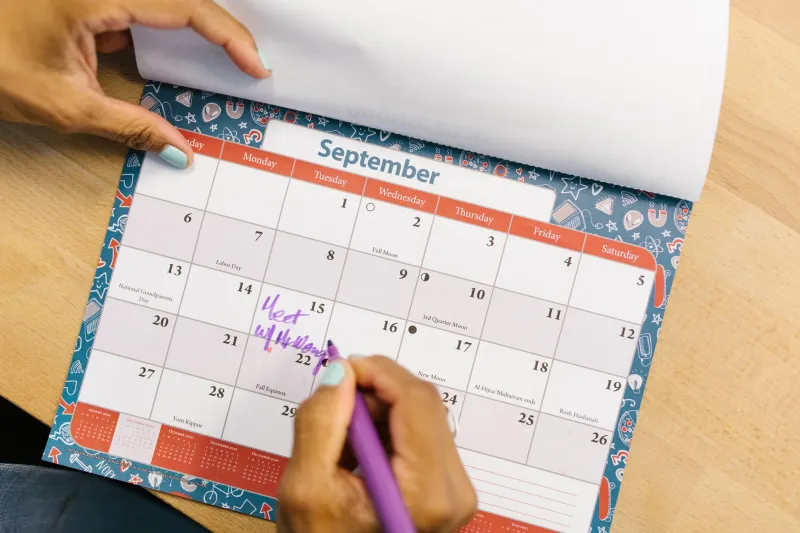
If you haven't tried it yet, the reservation link is right there on the site. It takes about two minutes to book. Which, given everything, feels appropriately efficient.