Dinner Got Quieter. Here's Why That's Actually a Good Thing.
The Noise We Didn't Know We Were Making
Think about the last time you sat down for a meal at a restaurant and actually tasted your food. Not just ate it — but tasted it. Noticed the texture, the temperature, the way a flavor built slowly before fading. If you're struggling to remember, you're not alone.
American dining culture has always been loud. Not just in decibels — though restaurant noise levels have genuinely climbed over the past two decades — but loud in the sense of busy. Phones on the table. Conversation overlapping with the music overlapping with the ambient hum of forty other conversations. We've treated restaurants less like places to eat and more like stages where we perform being social.
But something is shifting. Quietly, almost imperceptibly, a different kind of diner is emerging. One who puts the phone away before the first course arrives. One who pauses before picking up chopsticks. One who lets the food speak first.
What Japanese Dining Culture Has Always Known
In Japan, the act of eating has never been purely functional — or purely social, for that matter. It sits in its own category, somewhere between ritual and art form. There's a reason the phrase itadakimasu exists: spoken before every meal, it's an expression of gratitude that slows everything down for just a moment. It marks a transition. The busy world stays outside; the table becomes its own space.
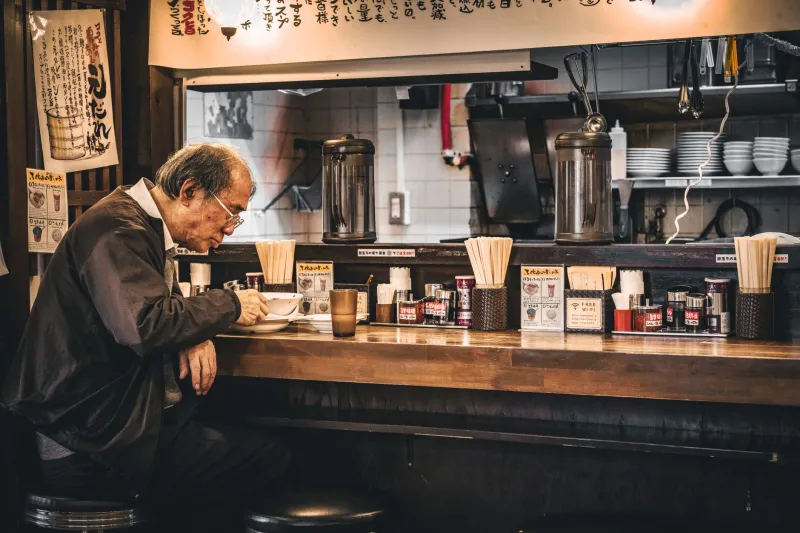
This isn't about being antisocial. Japanese dining culture is deeply communal in its own way — shared plates, thoughtful service, the quiet choreography of a well-run restaurant. But there's an understanding baked into the experience that the food itself deserves attention. A bowl of ramen crafted over twelve hours of simmering broth isn't background noise for a conversation about your commute. It's the main event.
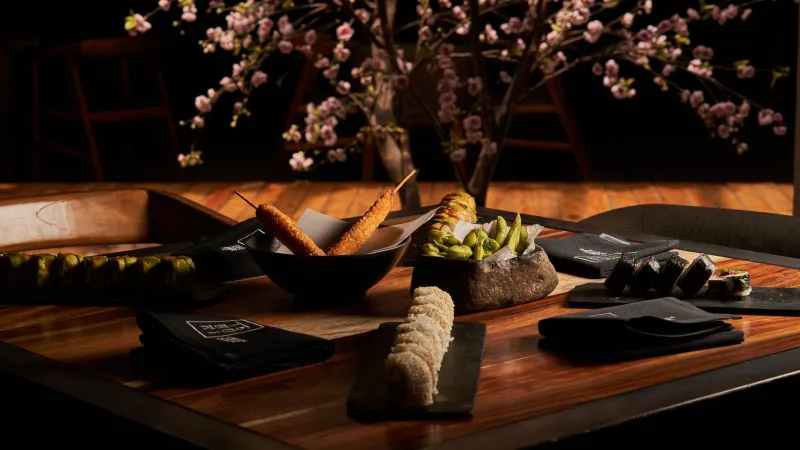
That philosophy shapes everything from the pacing of courses to the way dishes are presented. At places like 36 Sakura Café, a plate doesn't just arrive — it appears. The arrangement is deliberate. The pause before you eat isn't awkward; it's the point.
The Science Behind the Stillness
Interestingly, what Japanese culinary tradition figured out intuitively, researchers are now confirming through data. Studies on mindful eating — a practice rooted in paying full sensory attention to food without distraction — consistently show that slowing down at the table leads to better digestion, greater satisfaction with smaller portions, and a more accurate sense of fullness. When we eat fast and distracted, we override the body's natural signals. When we slow down, those signals actually get through.
Beyond the physical, there's a psychological dimension worth considering. In a culture that glorifies productivity and constant connectivity, choosing to be fully present at a meal is, quietly, a radical act. It's a declaration that this moment is worth your undivided attention. That a single bite of something beautiful deserves more than half your focus while the other half scrolls Instagram.
More American diners are arriving at this realization — not through wellness campaigns or food influencers, but simply through the experience of eating somewhere that makes stillness feel natural.
Why the Restaurant Environment Matters More Than You Think
You can't manufacture presence through willpower alone. The environment does a significant amount of the work. This is something Japanese restaurant design has long understood and something Western dining spaces are only beginning to catch up on.
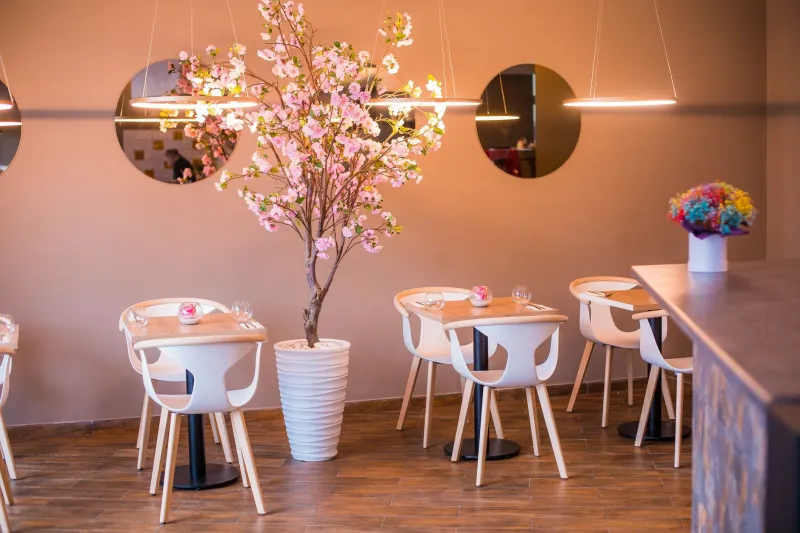
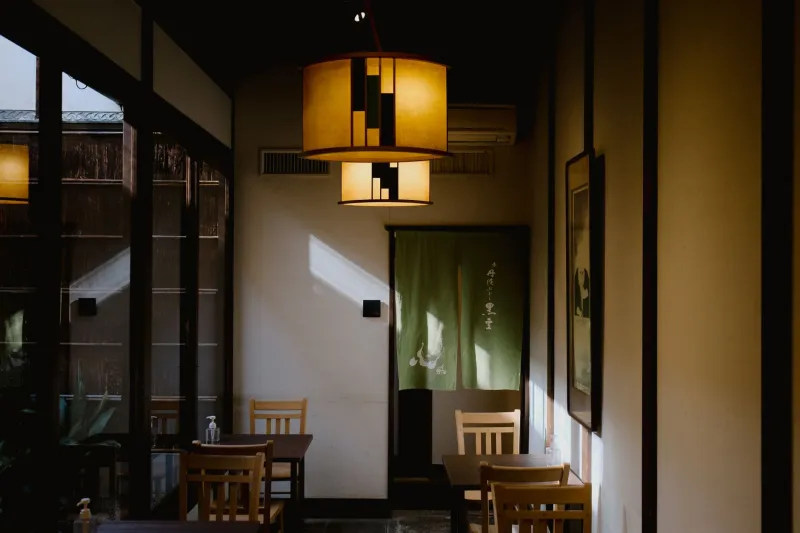
Consider what happens when a space is designed with restraint. Soft lighting that doesn't demand your attention. Music low enough that it recedes into the background rather than competing with your thoughts. Tables spaced generously, so you don't feel the pressure of neighboring conversations. Fewer items on the menu, each one chosen with care rather than assembled to overwhelm.
At 36 Sakura Café, the 36-seat capacity isn't an accident or a limitation — it's a philosophy made physical. With fewer tables, the pace of service can breathe. The staff can be genuinely attentive rather than stretched thin. And you, the diner, can settle in rather than feel like you're passing through a conveyor belt of covers.
The cherry blossom aesthetic does something specific here, too. Sakura imagery — petals, soft pinks, the suggestion of something fleeting and worth noticing — primes the mind for a different mode of engagement. It's a visual cue that says: slow down, look closely, this won't last forever. That's not just decorative. That's psychology.
The Dinner Table as a Digital Detox
There's a reason wellness retreats and meditation apps are booming right now — Americans are genuinely overwhelmed, and they know it. What's interesting is that the restaurant table is emerging as an unexpected site of recovery. Not therapy, not a spa day. Just a meal, eaten slowly, with full attention.
Some restaurants in major cities have begun experimenting with phone-free policies or offering "quiet tables" where conversation is kept to a minimum. The reaction, predictably, has been mixed — but the people who try it tend to come back for it. There's something disarming about being given permission to just be somewhere without performing.
Japanese dining spaces have offered this permission for a long time, even without making a policy of it. The culture around the table communicates it through atmosphere, pacing, and presentation. You don't need a sign that says "put your phone away" when the food in front of you is compelling enough to hold your full attention.
What This Means for How You Dine Next
None of this requires a dramatic lifestyle overhaul. It starts with something small: arriving at the table without already being somewhere else in your head. Taking a breath before the first bite. Letting the food land before you reach for your phone to photograph it.
If you've ever left a meal feeling vaguely unsatisfied despite eating plenty, there's a decent chance the problem wasn't the food. It was the attention you brought to it — or didn't.
The Japanese dining tradition offers something genuinely useful here: a model for treating a meal as a complete experience rather than a pit stop. Presence isn't a luxury reserved for special occasions. It's available at every table, every time, if you're willing to show up for it.
And when the space around you is designed to help — when the lighting is soft, the menu is focused, the service is unhurried, and the plate in front of you looks like something worth pausing for — showing up gets a whole lot easier.
That's the quiet revolution happening at dinner tables right now. It didn't start with a trend piece or a wellness brand. It started, as most good things do, with someone paying close attention to a beautiful meal.