Your Brain on Dinner: The Surprising Science Behind Why Americans Are Ditching Long Meals for Something Better
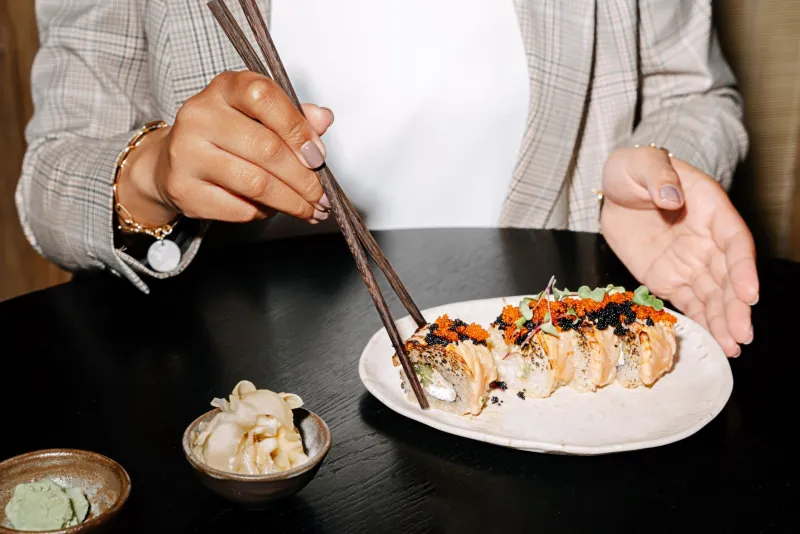
Something subtle is shifting at American dinner tables. Not loudly, not all at once—but it's there. People are starting to question the two-and-a-half-hour restaurant marathon. They're pushing back against the idea that a "great meal" has to mean a long one. And increasingly, they're seeking something that feels almost counterintuitive: less time, more meaning.
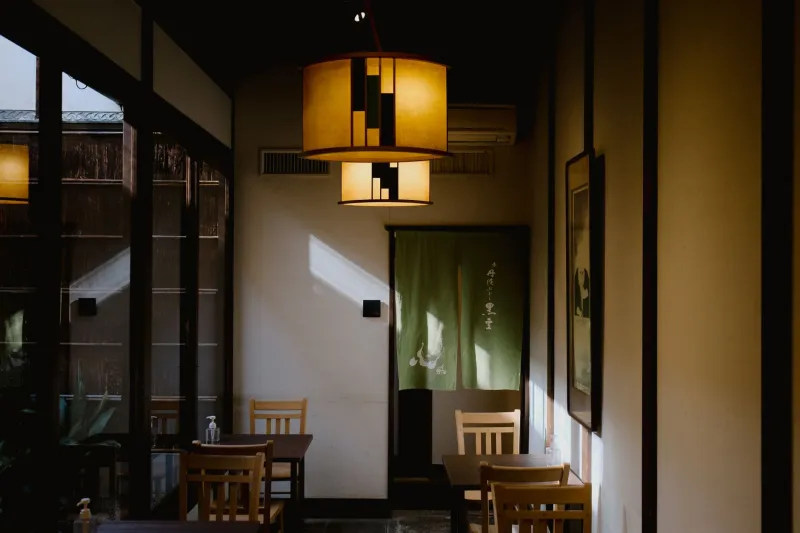
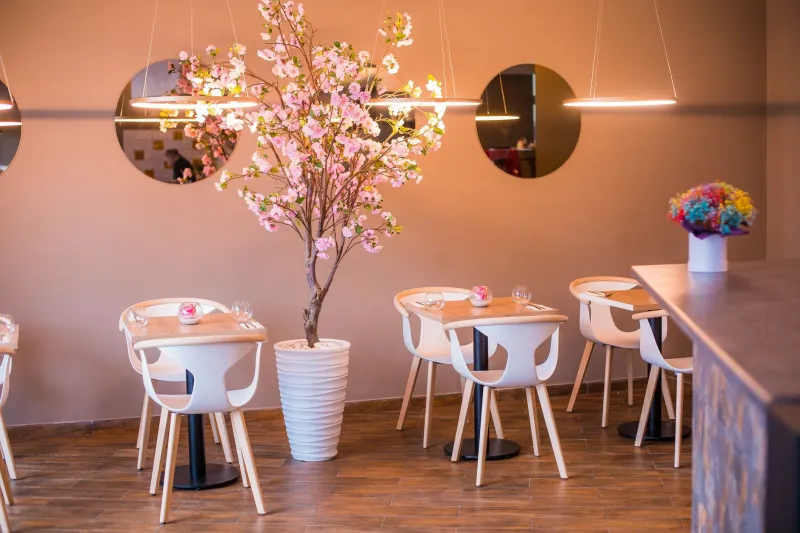
At 36 Sakura Café, we've watched this unfold up close. Guests arrive a little uncertain about our pacing—and leave telling us it was the most present they'd felt at a dinner table in years. That's not a coincidence. Turns out, there's real science behind why a focused, intentional dining experience can hit completely differently than a sprawling, distracted one.
What's Actually Happening in Your Brain at Dinner
Dr. Lisa Feldman Barrett, a neuroscientist at Northeastern University whose work focuses on how the brain constructs experience, has written extensively about the role of context in shaping how we feel. Her core insight—that our brains are constantly predicting and updating based on incoming signals—has direct implications for how we eat.
When you sit down to a long, unfocused dinner, your brain is juggling a lot: background noise, your phone, the conversation three tables over, the menu you're still debating twenty minutes in. That cognitive load doesn't just make you distracted. It actively dulls your sensory experience. You're tasting less, noticing less, and—critically—enjoying less, even if the food is technically excellent.
Contrast that with a meal structured around presence. Fewer choices. Quieter surroundings. A pace that gives each course room to breathe. Suddenly your prefrontal cortex isn't overwhelmed, and your brain can actually do what it's built to do: find meaning, build memory, and register pleasure.
"Attention is the prerequisite for any deep experience," says Dr. Judson Brewer, a psychiatrist and neuroscientist at Brown University who studies mindfulness and habit formation. "When we eat with divided attention, we're essentially leaving most of the experience on the table."
Literally.
The 15-Minute Window That Changes Everything
Here's a number that keeps coming up in behavioral research: 15 minutes. That's roughly how long it takes for a mindfully eaten meal—one where you're engaged with your food, your company, and your environment—to begin producing measurable changes in stress hormones like cortisol.
A 2020 study published in Nutrients found that participants who ate slowly and with focused attention reported significantly higher satisfaction scores than those who ate the same food quickly or while distracted. But more interesting than satisfaction was the stress data. The mindful eaters showed lower cortisol levels post-meal, even when the meals themselves were identical in content and caloric value.
Translation: the way you eat is doing something to your nervous system that the food alone cannot.
This is the idea baked into everything at 36 Sakura Café—from the 36-seat limit that keeps the room from tipping into chaos, to the seasonal menu that removes the paralysis of too many choices, to the intentional pacing that gives each dish a moment to actually land.
Why Japanese Dining Culture Got There First
Japan has a concept called hara hachi bu—eating until you're about 80% full. It's often cited in longevity research, particularly studies on the people of Okinawa. But the underlying principle isn't just about portion size. It's about paying enough attention to your body to notice when you're approaching satisfaction, rather than blowing past it.
That kind of awareness requires presence. And presence, in the context of Japanese dining philosophy, is something that's deliberately cultivated through the environment, the ritual, and the pace of the meal itself.
The Japanese concept of ma—negative space, or the meaningful pause—shows up everywhere in traditional dining. The silence between bites. The moment before the plate arrives. The unhurried transition from one course to the next. These aren't accidents of culture. They're technologies for attention.
"American dining culture has historically been about abundance," says Dr. Kristin Neff, a psychologist at the University of Texas at Austin known for her research on self-compassion and wellbeing. "But we're starting to see a real appetite—pun intended—for depth over volume. People want to feel something at dinner, not just consume."
The Wellness Angle Nobody's Talking About Enough
The wellness industry in the US is enormous—valued at over a trillion dollars and growing. And yet, for all the focus on what we eat (macros, superfoods, gut health), there's been surprisingly little mainstream attention on how we eat.
That's starting to change. Registered dietitians are increasingly incorporating mindful eating practices into their work with clients, not as a weight-loss tool, but as a stress-reduction strategy. Therapists who specialize in anxiety are recommending intentional mealtimes as a form of daily grounding. And restaurants—a few of them, anyway—are beginning to design experiences that support rather than undermine those goals.
At 36 Sakura Café, the cherry blossom theme isn't just aesthetic. Hanami—the Japanese tradition of gathering beneath blooming sakura trees to appreciate the fleeting beauty of the moment—is fundamentally about presence. About stopping. About letting something beautiful be enough.
That spirit carries into every plate we serve. The sakura-inspired elements on the menu aren't decoration. They're a reminder that this moment, this meal, this bite—it won't come back. Pay attention.
What Diners Are Actually Saying
We hear it over and over from guests: they didn't expect to feel calm. They came in curious, maybe a little skeptical about the pacing or the limited menu. And they left quieter than they arrived—in a good way.
That's not magic. That's your nervous system doing exactly what it's designed to do when it's finally given the conditions to settle. Fewer inputs. More signal. Less noise.
Behavioral economist Dan Ariely has written about how constraints—counterintuitively—often increase satisfaction. When you have fewer choices, you invest more meaning in the ones you make. When a meal has a defined shape, you're more likely to be fully inside it rather than perpetually planning your way through it.
That's the quiet revolution happening at tables like ours. Not fewer courses. Fewer distractions. Not a shorter evening. A fuller one.
The Takeaway (That Isn't Really About Food)
The most interesting thing about the science of mindful eating isn't what it tells us about food. It's what it tells us about attention—and how rarely we give it fully to anything anymore.
Dinner is one of the last daily rituals most of us still share. It's a built-in opportunity to be somewhere, with someone, experiencing something. And yet we've gotten very good at being physically present at a table while mentally somewhere else entirely.
What the research keeps pointing toward—and what Japanese dining culture has embodied for centuries—is simple: the meal that asks something of you gives something back. Show up for it. Taste it. Let the pause before the next course actually be a pause.
Your brain will notice. And if our guests are any indication, so will the rest of you.