Why Booking Months Out Feels Like a Relief, Not a Chore
Let's be honest: the average American has access to more dining options right now than at any point in human history. You can open an app, filter by cuisine, price range, and distance, read 847 reviews, and still spend twenty minutes staring at your phone completely unable to decide where to eat. Then you settle on something, show up, wait forty-five minutes, and spend half the meal wondering if the other place would have been better.
That's not a you problem. That's decision fatigue — and it's quietly ruining dinner for a lot of people.
Here's the counterintuitive part: the solution might not be more options. It might be far, far fewer.
The Paradox of Too Much Choice
Psychologist Barry Schwartz put a name to this phenomenon back in 2004 with his book The Paradox of Choice, and the core argument has only gotten more relevant since. When we have too many options, we don't feel free — we feel paralyzed. And after we finally make a decision, we feel less satisfied with it, because the mental weight of all those unchosen alternatives lingers.
Behavioral economists call the mental cost of evaluating options "choice overload," and it's been documented in everything from retirement fund selection to jam purchases at a grocery store. The famous jam study — conducted by psychologists Sheena Iyengar and Mark Lepper — found that shoppers were actually more likely to buy jam when presented with six options versus twenty-four. Abundance, it turns out, is not always abundance.
Now apply that to the modern restaurant landscape, and things start to make a lot more sense.
What Scarcity Does to Your Brain
When something is genuinely hard to get, something shifts in how we relate to it. The limited availability isn't just a marketing trick — it changes the actual cognitive experience of the thing itself.
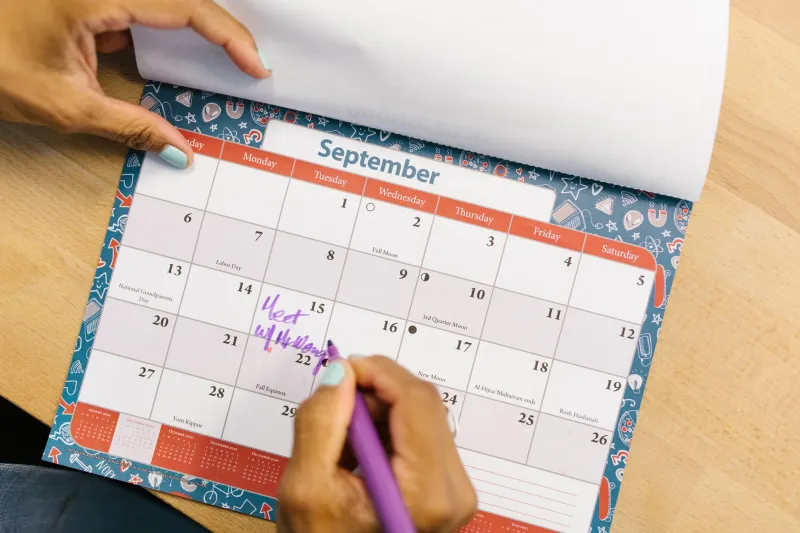
Booking a table at 36 Sakura Café weeks or even months out isn't designed to be an inconvenience. It's the opposite. The moment you lock in that reservation, a decision that could have been agonized over indefinitely is done. Settled. You don't have to think about it again until the day arrives — and when it does, you arrive with a completely different mindset than you would walking into a place you found on a whim fifteen minutes ago.
There's a term in psychology called "anticipatory savoring" — the pleasure we get from looking forward to something. Research from the University of Colorado found that people often derive as much (and sometimes more) enjoyment from anticipating an experience as from the experience itself. A reservation made weeks in advance gives you weeks of that low-grade excitement. A same-night booking gives you almost none of it.
The Intentionality Effect
There's something else that happens when you plan ahead for a meal: you show up intentionally. You're not there because it was convenient or because the app said it had a short wait. You're there because you chose it, specifically, and you've been thinking about it.
That changes everything about how you experience the meal.
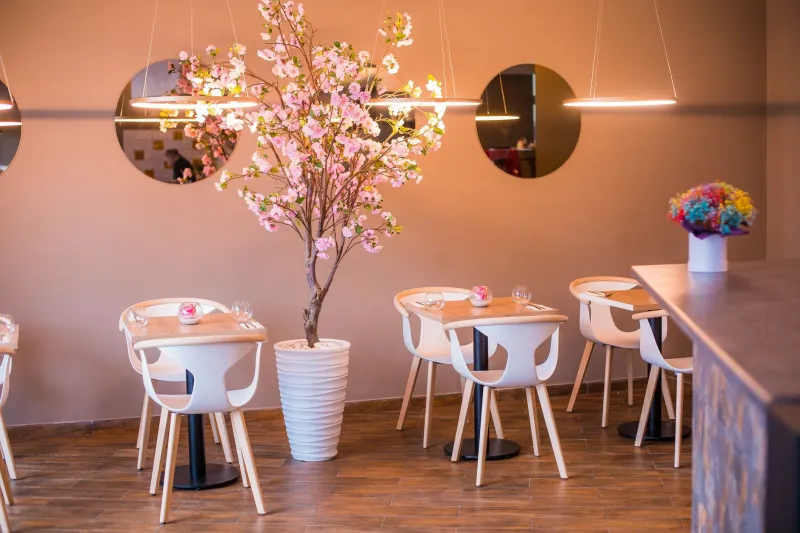
At 36 Sakura Café, the 36-seat limit isn't arbitrary. It's the whole point. With only 36 guests at any given service, the kitchen can be precise in a way that simply isn't possible when you're feeding hundreds. The ingredients are sourced with that exact number in mind. The pacing is calibrated. The atmosphere stays intimate rather than chaotic. But none of that works if the room is half-empty on a whim or overbooked because it was a slow Tuesday.
The reservation system exists to protect the experience — for you and for everyone else in that room.
How This Is Different from American Restaurant Culture
Most American dining culture is built around accessibility and volume. The goal, broadly, is to serve as many people as possible as efficiently as possible. Tables turn quickly. Menus are long. Specials rotate to keep things interesting. The assumption is that more = better.
Japanese dining philosophy — particularly in the kappo and omakase traditions that inform a lot of what happens at 36 Sakura Café — operates from a fundamentally different premise. The chef decides. The season decides. The number of guests is fixed not to create exclusivity for its own sake, but because quality and quantity genuinely don't scale the same way.
When you book a table here, you're not just securing a seat. You're opting into a system that has already done a significant amount of the deciding for you. The menu will reflect what's best right now. The experience has been thought through. You don't need to arrive with a list of questions or dietary negotiations (within reason — we always want to know about allergies and needs). You just need to show up and be present.
For a lot of American diners, that's a genuinely unfamiliar feeling. And a surprisingly good one.
The Mental Health Case for Constraints
This isn't just about food. There's a broader cultural conversation happening right now about the mental toll of infinite options — from streaming services to social media feeds to career paths. Therapists and researchers alike are starting to make the case that constraints, when chosen deliberately, are a form of self-care.
Deciding in advance, committing to something, and then not having to decide again frees up significant cognitive bandwidth. That's bandwidth you can spend actually enjoying your evening instead of second-guessing it.
The reservation you made three months ago? It's not a burden. It's a gift you gave your future self — a small, deliberate act of narrowing the world down to one beautiful, specific thing.
What to Do With That Anticipation
If you've got a reservation at 36 Sakura Café coming up, lean into the waiting. Look up the season's ingredients. Think about who you're bringing and why. Let yourself look forward to it in a low-key, unhurried way. The research suggests that kind of gentle anticipation is genuinely good for you.
And when the night finally arrives, notice the difference between walking into a place you planned for versus one you stumbled into. Notice how it feels to already know, with certainty, that this is exactly where you're supposed to be.
That feeling has a name. It's called being present. And it turns out, a reservation made months in advance might be one of the better ways to get there.